

How about enjoying a smashing good indoor farming experience saying adios to those nettlesome critters and diseases? Thanks to the greenhouse gardening ecosystem – growing exotic flowers, veggies and fruits all year round has never been this easier!
But what is greenhouse gardening, and how can it help your garden grow faster than ever? To know more about how plants are grown in greenhouse, read on.
What is a Greenhouse?
A greenhouse is a specially structured building with a roof and walls constructed of translucent materials, like glass, PVC, polycarbonate, or plastic, in which seasonal veggies, fruits, flowers, etc., are produced by regulating the inside climate condition parameters – humidity, temperature, and more. This growing system operates based on the ‘Greenhouse Effect’.
The purpose is to let out-of-season/tender plants grow by well-regulating the sunlight and protecting them from excessive heat or cold.
Types of Greenhouses
Based on the structure construction style, size, and types of plants you want to produce, a greenhouse can be of different types, including:
- A cold frame greenhouse is a transparent-roofed enclosure constructed low to the ground. It produces a microclimate condition inside that is warmer than the environment around the encapsulated area for the plants to grow optimally using the natural heat.
- A portable greenhouse is a lightweight yet high-tech compact-sized greenhouse kit that can be effortlessly assembled or disassembled. It is ideal for seed starts, native/non-native crops, small flowers, and sensitive plants and can be your pick if you have just started gardening and want to grow crops in less ideal climate conditions.
- A raised bed greenhouse is a portable system with aerated soil to help you avoid the pesky varmints, hassles of weeding, or freezing earth while sowing seeds or planting seedlings. If you have started your garden with limited space, a raised bed greenhouse with a roll-up covering can be your pick to ensure well-controlled climate parameters for optimum crop growth.
Easy to Grow Plants in Greenhouses
Nothing is more cheering to witness the saplings you planted so fervently grow into bountiful, healthy plants. Greenhouse gardening is great to yield a whole array of high-grade crops, yummy veggies, and flowers with mind-blowing colour and smell year-round.
Some easy-to-grow greenhouse plants are:
- Flowers and Ornamental Plants – geraniums, petunias, salvia, impatiens, ferns
- Greenhouse and Vegetables – spinach, tomatoes, eggplants, cucumbers, kale, carrots, chilies, green onions, lettuce, summer or winter squash, and more
- Greenhouse Herbs and Spices – parsley, mint, tarragon, sage, bay laurel rosemary, thyme, catnip, anise, cilantro, and more
- Greenhouse Fruits – Strawberry, raspberries, pepper varieties, cherries, muskmelon, lemons, grapes,
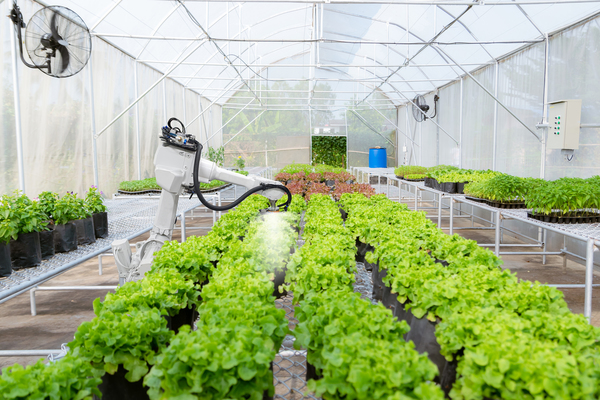
How does a Greenhouse Work: How Plants are Grown in Greenhouse?
Greenhouses, by providing two essential ingredients – temperature and heat – according to the requirement of each plant, promote plant growth.
Let’s dive deep into how a greenhouse works:
Step 1: Light Comes In
The operation all starts with sunlight that radiates into the greenhouse. As a greenhouse is a structure made of transparent materials, plenty of light can enter the system. The electromagnetic radiation given off by the sun is actually shortwave light containing higher energy, and the slanted roof of the greenhouse system allows maximum solar energy to transmit through it.
Step 2: Heat is Absorbed
The sunlight refracted through the greenhouse exterior surface bounces around, gets absorbed by the floor, plants, objects, and soil inside, and transforms into thermal energy – heat and infrared rays. How much heat would be absorbed is a factor of greenhouse system size, angle of incidence, the latitude of the location, sun exposure at different hours of the day, etc.
Step 3: Heat Gets Trapped!
To reiterate, the objects inside the system absorb and then radiate the converted heat. However, as a greenhouse is constructed of glass mainly, which is an insulator, it lets the radiated infrared rays of longer wavelength through but blocks the heat! Thus heat gets trapped, starts building up and heating the air inside the system. The darker the objects are inside, the more heat gets trapped – the hotter it is inside.
Step 4: Warming the Greenhouse
As we have already stated, greenhouses harvest solar radiation by converting them into thermal radiation that cannot pass through the exterior, and thus the system gets warmer. Further, the system concentrates this thermal energy much more than the environment outside as the greenhouse system is air-tight, and the air mass inside is much smaller than the air mass in the outdoor environment. The result is that the air inside gets toasty and warm and raises the building temperature.
How much temperature would rise due to heat build-up may also depend on your location. For instance, based on the sun exposure of your areas, you may require to ventilate the system on a hot summer day. Plus, when there is no sun, you may need to install an artificial heating source so that the heat cannot escape the system faster at nighttime. Or you can build a heat-trapping system using materials of high thermal mass, like bricks, stone, and water, that can quickly absorb, hold and store more heat trapped during the daytime and radiate it out slowly at night.
Step 6: Promoting Photosynthesis
A greenhouse, by buffering the temperature, stabilises the system’s growing environment, saves crops from cold, and ensures supplying optimal light, humidity, and warmth for faster plant growth.
Further, concentrated CO2 content, the main catalysts to promote photosynthesis, is higher in the greenhouse ecosystem than outside.
The tactically installed horizontal fans or air jets improve ventilation all over this vented, well-controlled system and allow air to press nearer to the leaves to photosynthesis.
Plus, artificial light sources, for instance, paraffin lamps, help continue photosynthesis action beyond daylight hours.
The outcome is thicker stems, bigger leaves, and early fruiting and flowering.
Benefits of a Greenhouse
The benefits a greenhouse can offer include:
- Extended Growing Season: One of the surpassing advantages of greenhouse gardening is that now, you can create optimum growing conditions, prolong growing season or even grow out-of-season exotic fruits, flowers, and veggies in plenty – thanks to techniques like creating thermal solar mass.
- Keep Pests and Diseases Away: Thanks to greenhouse gardening that helps shield the growing area – you can control what comes in and goes out of your garden and keep the garden-loving rodents and bugs away. Plus, optimum growing condition means healthier disease-free plants.
- Portable, Customisable Garden: As a greenhouse is portable and customizable, and the plants are produced on jars, not in the land, you can, without undergoing much hassle, change the layout or even move it.
Disadvantages of Greenhouse
- Significant rise in upfront cost
- Higher operating cost
- The ventilation and heating system can be expensive to implement
- Though you have good control over your plants in greenhouse gardening, you may face some pollination issues
- Greenhouse plants and crops need ongoing maintenance and monitoring

Joel Stokes is the founder of Agrisurfer, a leading blog dedicated to exploring the intersection of technology and farming. With a deep passion for innovation in agriculture, Joel and his team of experts provide in-depth analysis and insights on everything from high-tech machinery to drone surveillance for livestock.