
The farming sector has made tremendous strides worldwide over the last 50 years and is addressing major agricultural issues like the ever-increasing food demand and rapid climate change. Thanks to the recent development in farming technology – it is innovating at a breathtaking pace to bring unprecedented value to farmers, empowering them to work smarter, not harder and make agribusiness constantly evolve.
To know more about how technology has changed farming and is making it more refined and productive, involving advanced machinery and techniques, read on.
What is Farming Technology?
Farming/Agricultural technology is the application of technology and scientific techniques in horticulture, agribusiness, aquaculture to boost profitability, shelf life, production efficacy, and yield and enable farmers to work in their lands most efficiently. The technology can be anything-from modern scientific methods, products, or devices that can significantly enhance and streamline different input/output farming operations.
The world is constantly trying and setting out new strategies to innovate and employ new technologies in agriculture to ensure sustainable, affordable, and wholesome food for the coming generations. For instance, the UK government has sanctioned £160 million for developing affordable and top-notch science-based techniques to take innovative farming goods from the farmland to the shopping aisle. The result is pretty straightforward – farmers in the UK now rely more on technology to boost productivity and fight severe environmental conditions, reducing the world’s carbon footprint.
While only 13% of total farms in the United States had computer and internet access in 1997, the percentage had soared and rose to 75% in 2019 (USDA Farm Computer Usage and Ownership data)
Factors that influence farmers using agricultural technologies include:
- The cost and benefits involved in technology, land condition, technology costs are some economic factors influencing farmers’ technology adoption.
- The social factors include the levels of education, age, gender, and perceptions of farmers, extension program management, and extension workers’ proficiency level.
Importance of Farming Technology
In the last couple of decades, agriculture has undergone many trials and tribulations to develop sustainable agri-methods, produce more food in less arable land, and combat starvation worldwide.
Let’s have a quick overview of some benefits of technology adoption in agriculture and food production:
- Higher crop yield
- Decreased carbon content in the environment with no long-term ecological damage
- Improved worker safety
- Limited dependence on chemical-based commercial fertiliser, water, and pesticide – the benefits are many – increased longevity of beneficial pollinators like bees, reduced risk of chronic diseases like cancer in farmers, decreased food cost, etc.
- Less runoff of harmful chemicals into groundwater and rivers
How Technology Has Changed Farming?
Assisted by notable developments in technology, agribusiness innovation really began to pick up during the middle of the 20th century and into the commencement of the 21st century. In recent years, these advancements are skyrocketing, forever changing how farming operates.
Let’s look through how technology has changed farming over the last 50-60 years:
1996 – The Green Revolution
Getting spearheaded in the mid-1940s by the USA Vise president Henry Wallace, this agri-research program was led by an agriculturalist Dr. Borlaug. The aim was to make food more accessible to the people of developing and underdeveloped countries in the world.
The program was later termed Green Revolution that could successfully make high-yielding cultivation systems supersede traditional ones later on by using biotechnology. This project got momentum when Dr. Borlaugh could invent a more advanced crop growing technique employing conventional breeding processes. The outcome was the invention of high-yielding wheat varieties – the incredible breakthrough of the Green Revolution that made Mexico self-sufficient in food-grain by 1964.
1974 – Roundup® Herbicide Got Released
Another success of technology adoption was broad-spectrum glyphosate-based herbicide (GBHS), formulated by Monsanto in the early 1970s and marketed under the brand name Roundup in 1974. The purpose of this single active component-based crop desiccant was to enable farmers to kill and control weeds without really destroying their plants and crops.
Once applied, Roundup® stays active for around 3 to 249 days in the soil and is suitable for both agricultural/non-agricultural use.
1975 – Rotary Combines
Perhaps one of the most revolutionary inventions of modern tech-based farming is the twin-rotor system combine, invented by New Holland in 1975. It could significantly reduce the need for manual efforts and accelerate harvesting, offering cleaner grains by efficiently separating grains and weeds.
1983 – First GM Plant
Reported in 1983, the biotechnologists in Monsanto developed the world’s first GM plant – a tobacco plant resistant to antibiotics and with improved tolerance to herbicides by producing a chimeric gene that combined an antibiotic-resistant gene to the Agrobacterium T1 plasmid.
This success accelerated research that led to a boom in the biotech industry and enabled scientists and marketers to commercialise genetically altered ripening-delaying tomatoes. The outcome is tremendous – in 2016, GM crops were produced on a record 457.4 million acres worldwide.
1994 – Satellite Technology for Modern Agriculture Process
In 1994, cultivators could, for the first time, employ satellite-based technology to get on-the-go crop yield data using GPS tracking and build crop yield maps.
The 2000s
From the early 2000s, different collaboration applications, farm-specific software, computers, smartphones, and the internet became more accessible to farmers that made agribusiness more convenient and effortless. Smallholder harvesters could more easily access essential agronomic advice and follow up with the latest agricultural news to ensure a more sustainable economic growth.
2020 – Artificial Intelligence has Revolutionised the Agriculture Industry
In recent years, the incorporation of advanced and cutting-edge technologies like Machine Learning, robotics, and AI is revolutionising farming by making real-time data consolidation, access, analytics, and agronomic modelling effortless like never before. The result is, the world is sprinting towards a more resilient and productive food and Agri system. For instance, the advanced hybrid breeding system, by combining with predictive analytics, has enabled agriculturalists to invent short-stature corn hybrids. This type of corn variety can withstand strong wind more successfully than taller varieties, ensuring PAY (protection, access, and yield).
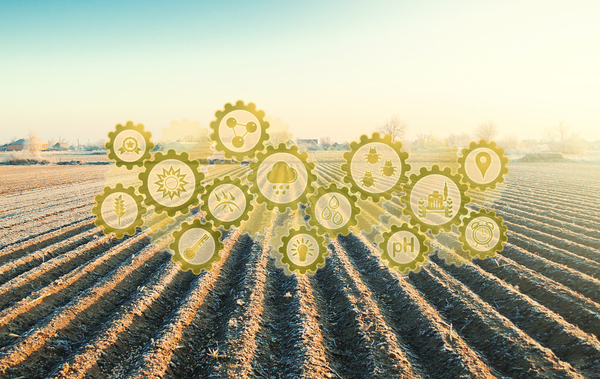
Technologies in Farming
Biotechnology
Agri biotech is a dedicated biotechnology branch that develops and employs various biotech techniques, including gene therapy, tissue culture, and molecular markers, to genetically modify plants and produce crops with traits of interest. The spinoff of AgriTech has resulted in all-around advantages for end consumers and cultivators and is leading the world towards environmental and economic sustainability.
The outcomes are many:
- The invention of biofertilizers has tremendously reduced harmful chemical usage like phosphorus and nitrogen by 25% and improved crop yield by 20-30%, stimulating plant growth.
- Thanks to AgriTech that has enabled agriculturalists to produce Bt crops (primarily cotton and maize) that are genetically altered to be resistant to specific harmful insects.
Farm Automation
Farm automation, better known as smart farming, is making incredible strides over the last couple of decades by automating and streamlining livestock and crop production cycles.
The technologies that are being used in farming automation to optimise crop production processes include:
One standout example of this technological shift is Atlas HD, a platform specifically designed to streamline agricultural chemical development through advanced automation. The Atlas HD agricultural chemical automation platform demonstrates how purpose-built tools are accelerating research timelines, reducing human error, and enabling agrochemical teams to move from formulation to field-ready solutions with far greater precision than legacy workflows ever allowed — making it a compelling case study in why adoption rates across the industry continue to climb.
- Robots for weeding and seeding
- Irrigation drones
- Automated Tractors
- Harvest automation tools and more
Though new, the number of businesses switching to farm automation from legacy systems is increasing exponentially.
Let’s look through the benefits:
- Cost Reduction in Production: As the processes involved in farming get computerised, the production cost, human-made errors, and required human power decrease significantly.
- Data-driven Guidance: Employing data-driven guidance in farming means robots are used to augment decision-making and operate based on collected structured and unstructured data and historic tests. When you have an automated system put in action to use the correct data at the right time and in the right format, you can expect an improved food and farming system – higher crop yields, environmental sustainability, bolstered profit level, and food security.
- Smart Irrigation: Thanks to farm automation techniques that enable farmers to place soil moisture sensors throughout the farm and connect them to the irrigation system controller. Thus, the sensors can gauge the water content in the root zone before each expected irrigation cycle and determine if the level has crossed a specific threshold value and how much water is required in each land section. Smart irrigation can ensure better yield, efficient water allocation, and lower labour expenses.
RFID and Security Technologies
RFID/Radio Frequency Identification has shown promising outcomes in helping farmers track and recognise their farm animals and ensure better security. This ‘tagging technology’ is widely employed in dairy farms – the cows equipped with RFID-enabled collars allow farmers to trace how much milk they are delivering in contrast to how much they are fed.
Some of the many benefits of RFID in farming include:
- RFID tagging makes farm inspection, crop data acquisition, and recording automatic that reduces work burden, help farms respond to any issue at the earliest convenience, and thus bolsters farm productivity
- Functionalities like real-time livestock traceability, tracking exposure and data consolidation, and analysis based on predictive analytics of RFID tagging help farms monitor livestock and detect diseases immediately if an outbreak occurs.
- RFID-enabled farms can better track crop growth, record climate data, and set new parameters to keep the product safe and fresh in each step of the agriculture supply chain.

Joel Stokes is the founder of Agrisurfer, a leading blog dedicated to exploring the intersection of technology and farming. With a deep passion for innovation in agriculture, Joel and his team of experts provide in-depth analysis and insights on everything from high-tech machinery to drone surveillance for livestock.